- Sheet
- L-5.1
- Subject
- Ground conditions — Beaverton
- Locality
- Washington County
Landscape design and build in Beaverton.
Flat ground, a dense clay layer under the topsoil, and five months a year when the water table sits a foot below your lawn.
A good soil sitting on a bad one
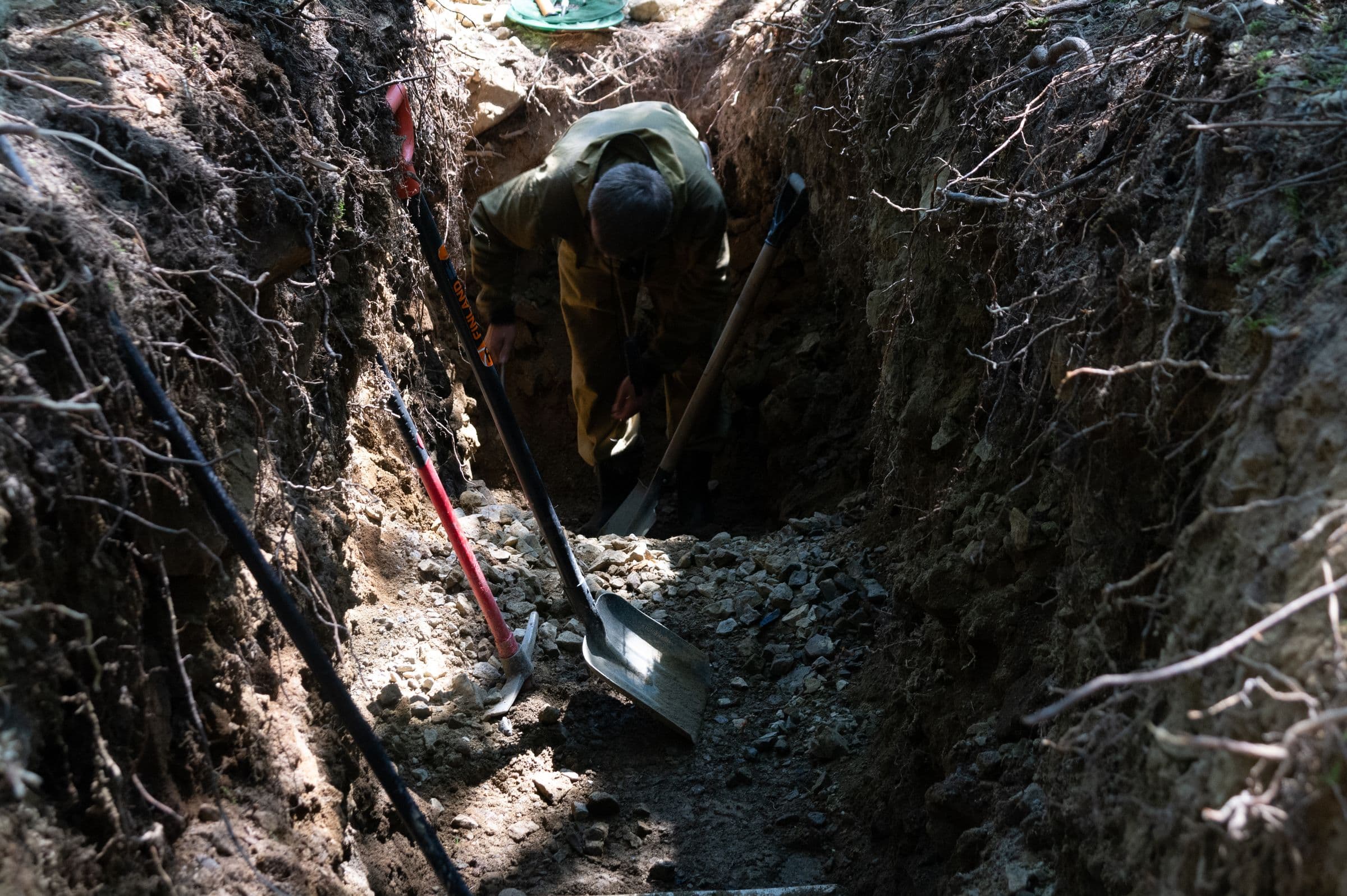
Most of Beaverton is Tualatin Valley silt loam — a genuinely decent soil, eighteen inches or so of it, sitting directly on a dense clay subsoil that water moves through very slowly.
From November to April, rain passes through the good layer, reaches the clay, and stops. It does not sink; it perches. That is why a bed can be soaking in February and bone dry in August, and why the plant that died in your garden probably drowned rather than starved.
The fix is almost never more topsoil on top. It is either getting the water somewhere — a drain with a real outfall, not a pit — or raising the planting above the perched layer and choosing species that will tolerate both extremes.
Flat is the problem, not the solution
There is very little natural fall on the valley floor, so a drain needs somewhere to actually go before it is worth installing. We work out the outfall first. A french drain that terminates in a gravel-filled hole in clay is a hole full of water, and we see a great many of them.
Deer
Not an issue in most of Beaverton. It becomes one up towards Cooper Mountain and along the western edge, where the suburbs meet farmland.
The lots
Seven to ten thousand square feet, typically, with a fenced rectangle at the back and a house set close to the front. Sun is usually not the limiting factor here; drainage is.
Clean Water Services, and they inspect
Washington County's vegetated corridors along streams and wetlands are administered by Clean Water Services and they are enforced. If a stream, ditch or seasonal wetland runs anywhere near your boundary, what you may plant and where you may dig is defined before we start. It is usually workable. It is never optional.
Watch for
Every Beaverton job starts with a hole
We dig, we fill it with water, and we time how long it takes to drain. It costs us an hour and it decides the entire drainage budget. If a contractor quotes your Beaverton garden without doing a percolation test, they have priced a guess and you will pay the difference later.