- Sheet
- L-1.1
- Subject
- Design phase
- Locality
- Portland, Oregon
- Scale
- From $3,800
There is no free consultation, and there is a reason.
A free visit buys you an hour of somebody trying to sell you a build. A paid design phase buys you a drawing you own, which will still be worth having if you never hire us.
We charge for design because designing properly takes between forty and a hundred and twenty hours, and nobody gives that away. What you get for it is a set of drawings detailed enough that three contractors could bid the same job and their numbers would be comparable — which is not true of most landscape quotes and is the main reason people overpay.
Before anything is drawn, we read the site.
A garden is not a blank rectangle. It has a slope, a water table, a soil profile, a set of shadows that move through the year, and usually a tree whose roots decide more than the client does. All of that gets recorded before a single plant is chosen, because a plan drawn without it is decoration.
Sun, measured rather than guessed
“Full sun” on a plant label means six hours. Almost nobody knows how many hours their own bed actually gets, and in Portland the answer changes enormously between June and October because the sun drops behind the West Hills early. We record shade at three points in the year, and the number of gardens where the client’s estimate was wrong by three hours is close to all of them.
Soil, from a hole rather than a map
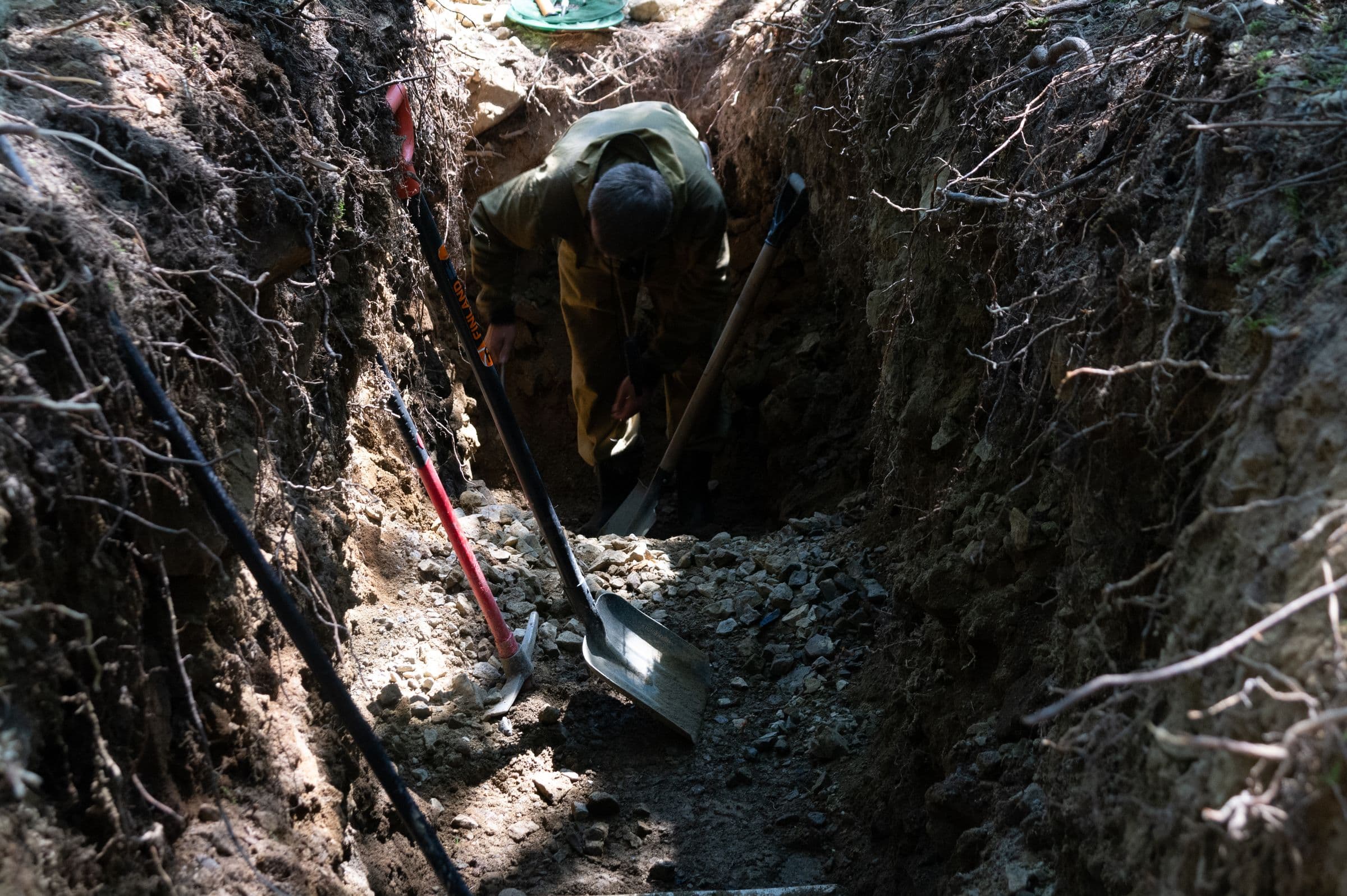
We dig test pits — usually three, sometimes six on a big lot — and we fill one with water and time it. That gives us the depth of usable soil, whether there is a compaction pan, where the clay starts and how fast the ground drains. It is an hour’s work and it sets the largest number in the budget.
Water, tracked to where it leaves
Where does roof water go? Where does the neighbour’s go? Is there a legal outfall, or does everything have to soak away on site? A drain with nowhere to discharge is a hole full of water, and we would rather find that out with a level than with a digger.
Slope, and what it costs to change
Every foot of level change is either a wall, a step or a bank, and all three have prices. We survey levels properly, because “it slopes a bit” has been the opening line of several very expensive conversations.
Then the planting plan, drawn at mature size.
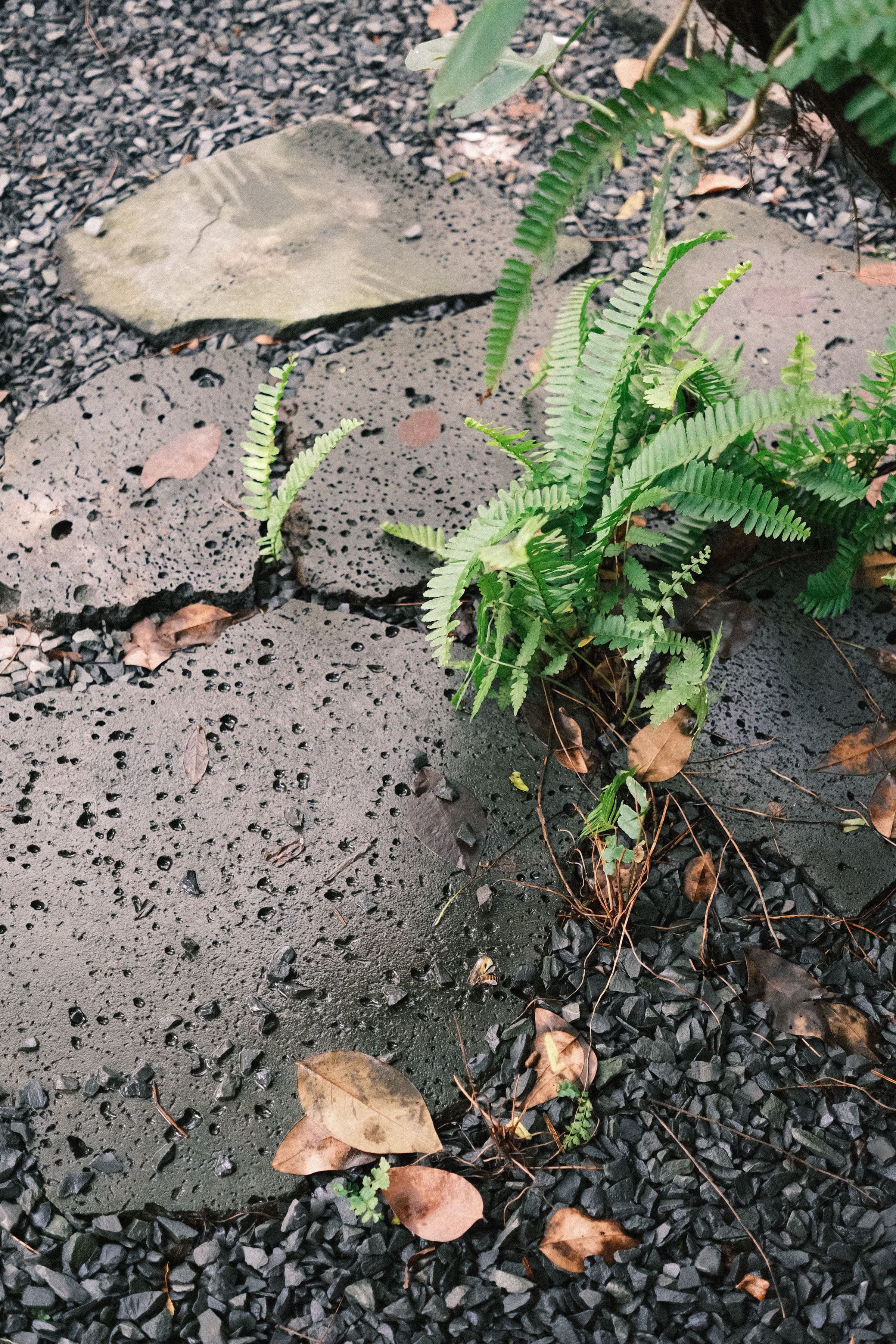
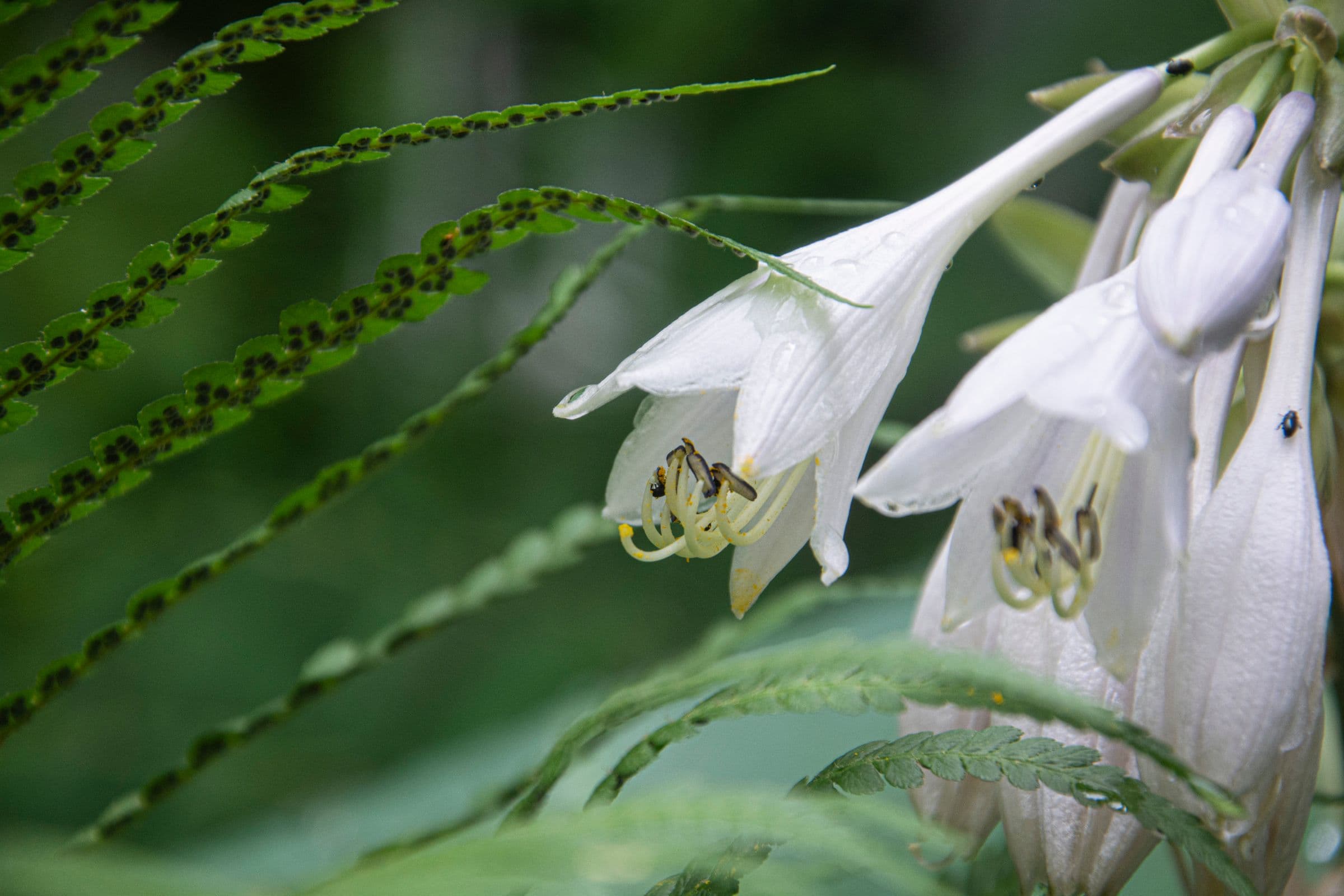
This is the part that separates a plan that works from one that looks good on paper. Every plant is drawn as a circle at the spread it will actually reach — not the spread on the label, which is usually a ten-year figure quoted as a final one.
Drawn that way, a plan looks sparse. Clients say so, every time. But it is the only way to space things so that the bed closes at year seven and is still worth looking at at year fifteen, rather than closing at year three and turning into a fight.
A worked example: Gaultheria shallon is sold in a one-gallon pot at about a foot across, and every instinct says plant it at two foot centres. It reaches six feet across. At two foot centres you have a problem in year six and a hedge you did not order in year eight.
Key — drawn at mature spread
- CAO×3Carex obnupta — slough sedge
- JUP×1Juncus patens — spreading rush
- COS×1Cornus sericea — red-osier dogwood
- SEA×3Sesleria autumnalis — autumn moor grass
- ARU×3Arctostaphylos uva-ursi — kinnikinnick
- ERU×2Eriogonum umbellatum — sulphur buckwheat
- MAA×2Berberis aquifolium — tall Oregon grape
- RIS×1Ribes sanguineum — red-flowering currant
Solid outlines are evergreen. Dashed outlines lose their leaves — which is what a plan should tell you before you build it, not after your first winter.
What you get, and what it is for.
- A measured base plan of what is actually there — levels, drainage, existing trees and their root zones
- A planting plan drawn to scale at mature size, not at nursery-pot size
- A full plant schedule with botanical names, quantities, sizes at delivery and mature spread
- Grading, drainage and irrigation layouts
- Hardscape details and material samples you can hold
- A build budget with a real range and a written note on what moves it
We present it in person, on paper, at the size it was drawn. Not a slideshow and not a walk-through render — a render sells a feeling, and the feeling is always of a garden in its eighth summer at six in the evening. We would rather show you the drawing and the ten-year section and let you ask hard questions about year one.
You get two rounds of changes inside the fee. Most people use one.