- Sheet
- L-1.2
- Subject
- Build
- Locality
- Portland metro
- Scale
- Own crews
Most of the money goes into things you will never see again.
Drainage, subgrade, soil. By the time a garden is finished, roughly half of what you paid for is buried, and it is the half that decides whether the other half is still alive in ten years.
Grading and drainage come first, and they are not negotiable.
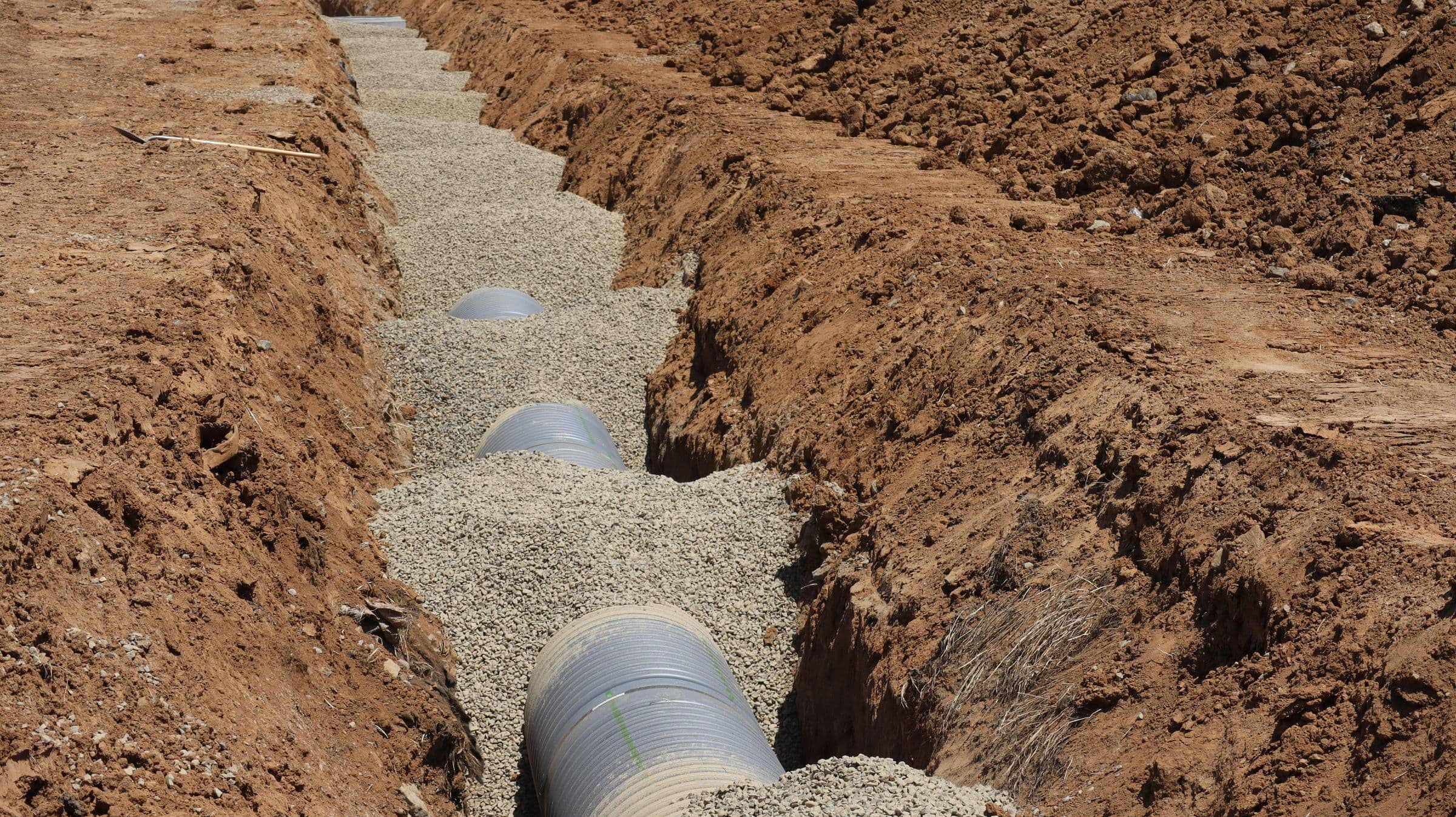
Nothing else can be done until water has somewhere to go. On a Portland job that usually means establishing falls across the site, cutting drain runs to a real outfall, and — where there is no outfall — building somewhere for the water to soak away that will still work in its twentieth winter.
A perforated pipe surrounded by clean drain rock in a trench wrapped with geotextile is a drain. A perforated pipe laid straight into clay with soil backfilled on top is a pipe full of silt within three years, and we have dug up a great many of them.
Where a rain garden is the right answer, it is often also the cheaper one, and in Portland it may qualify the property for the city’s stormwater utility discount for managing roof water on site. Worth asking about before you dig, not after.
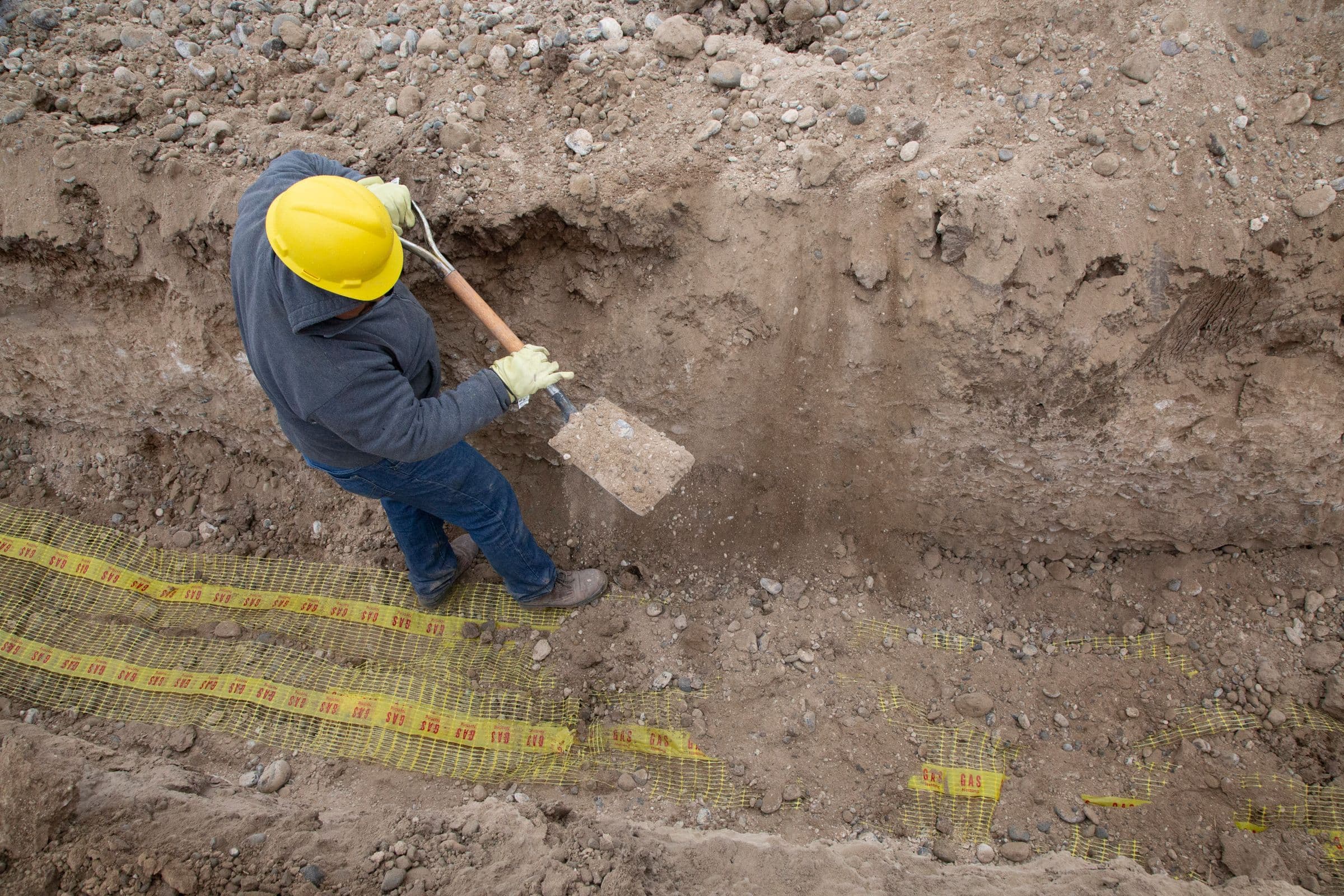
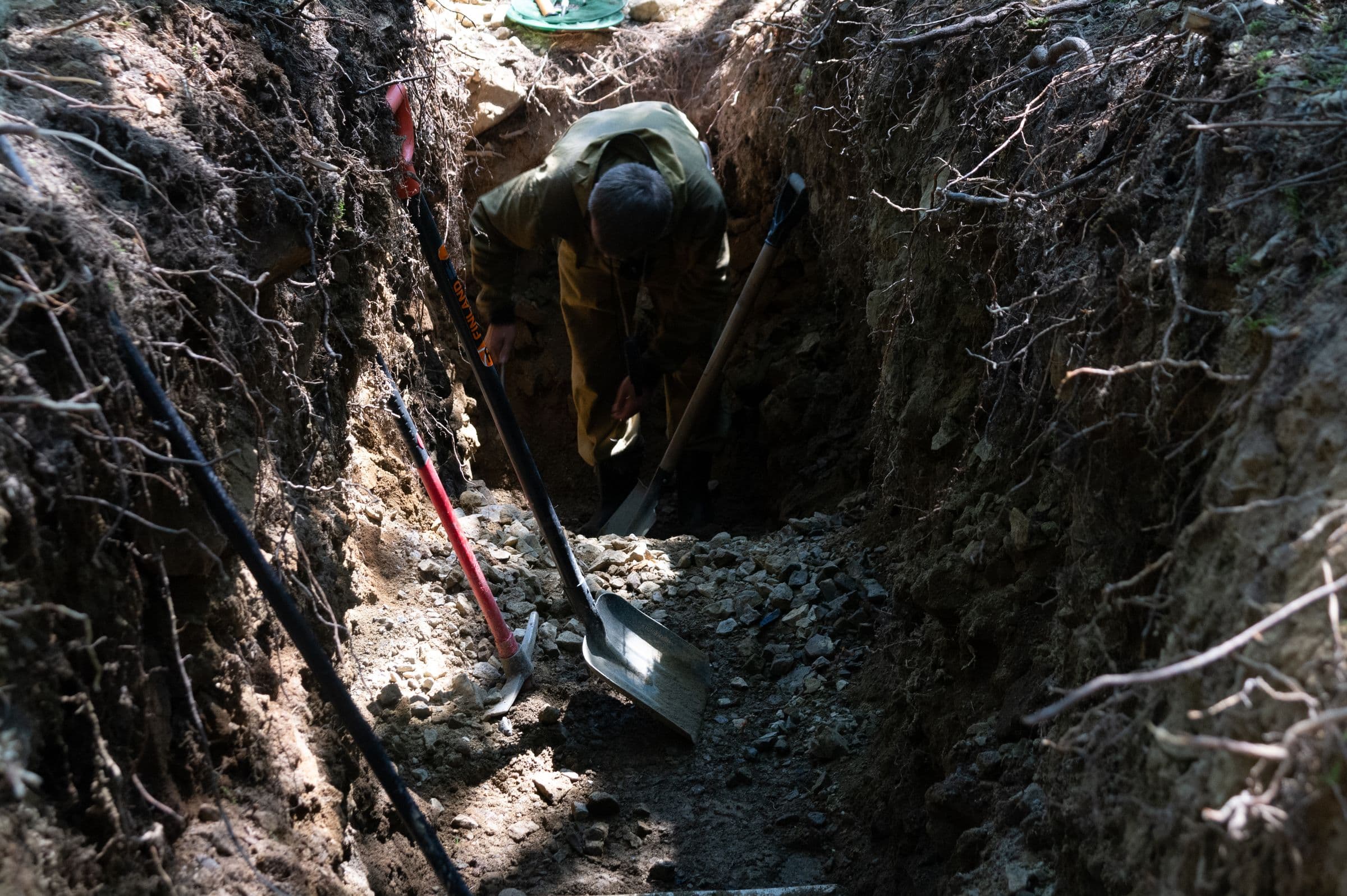
Soil preparation is the invisible half of the budget.
This is the line clients try to cut and the line we will not reduce. It is somewhere between eighteen and thirty per cent of a build, it takes two days, and at the end of it the garden looks exactly the same as it did at the start.
What it involves: ripping the subgrade to eighteen inches so there is no boundary for a root to stop at, then incorporating compost through the top eight to twelve inches rather than laying it on as a blanket. On a typical Portland back garden that is two to three hundred cubic yards of material moved for a result that photographs as brown.
We do not add fertiliser at planting and we do not use soil conditioners in bottles. Compost, and enough of it, in ground that has been broken up first. That is the whole method and it has not changed in a hundred years.
If you are comparing bids and one is four thousand dollars cheaper, ask each contractor two questions: how deep are you ripping the subgrade, and how many yards of compost have you allowed. The one who has priced it properly will answer immediately.
- Left — four inches of imported mix spread over ground that a machine has driven on. The plants root into the good layer, meet the compaction pan, and turn sideways. They survive for two or three years on irrigation and then die in the first dry August.
- Right — the subsoil is ripped to eighteen inches before anything is imported, so there is no boundary for a root to stop at, then eight inches of amended topsoil over the top.
Hardscape
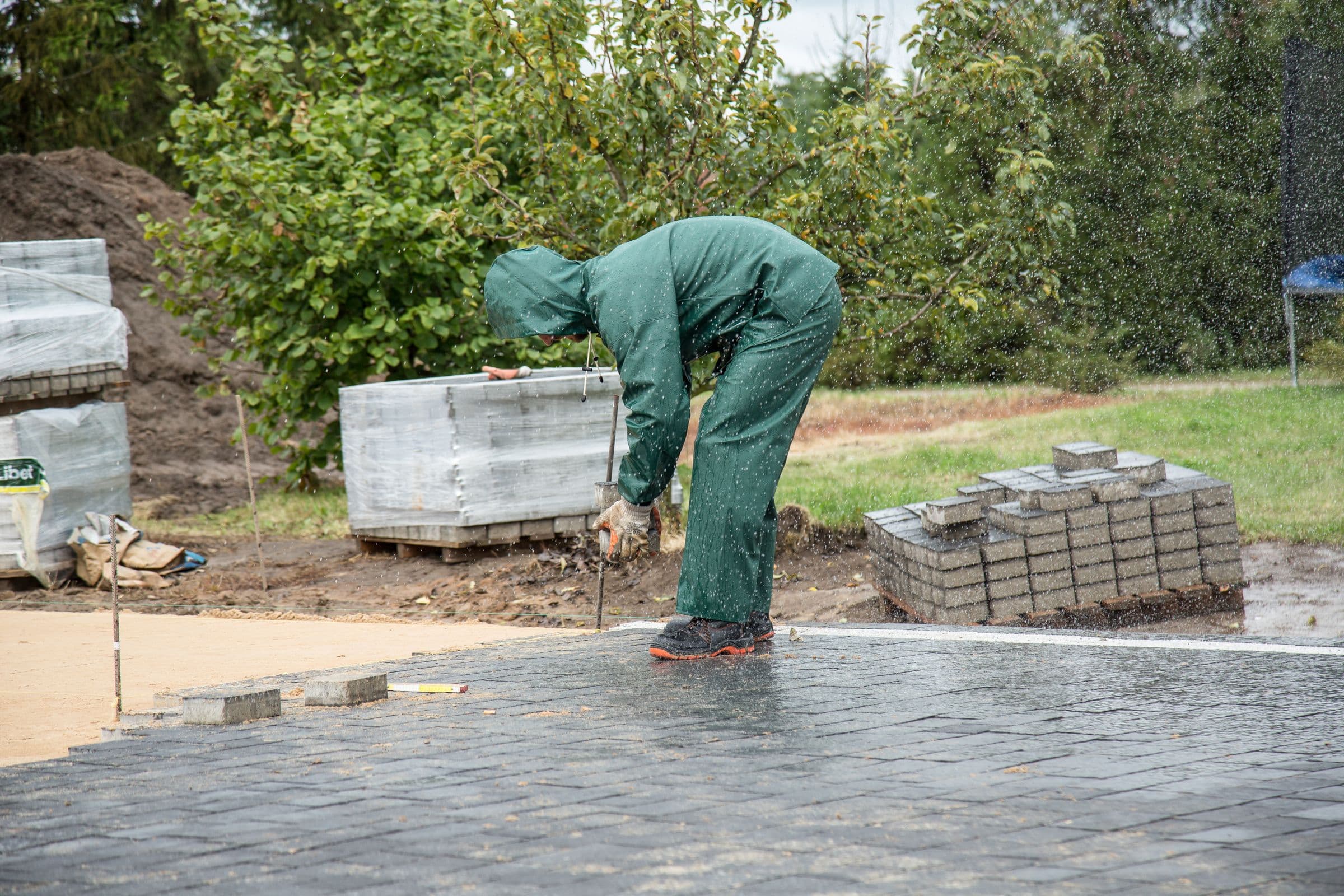
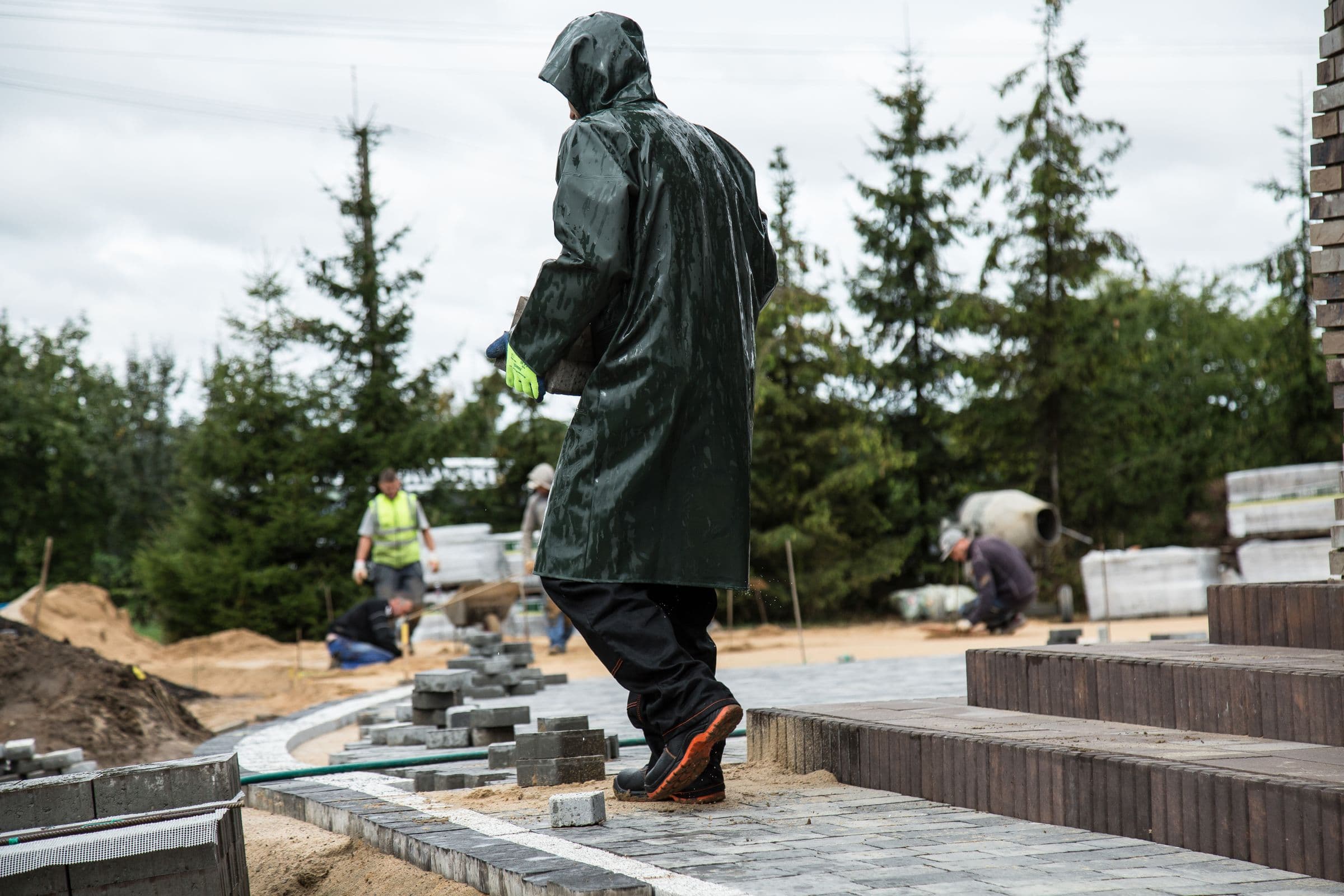
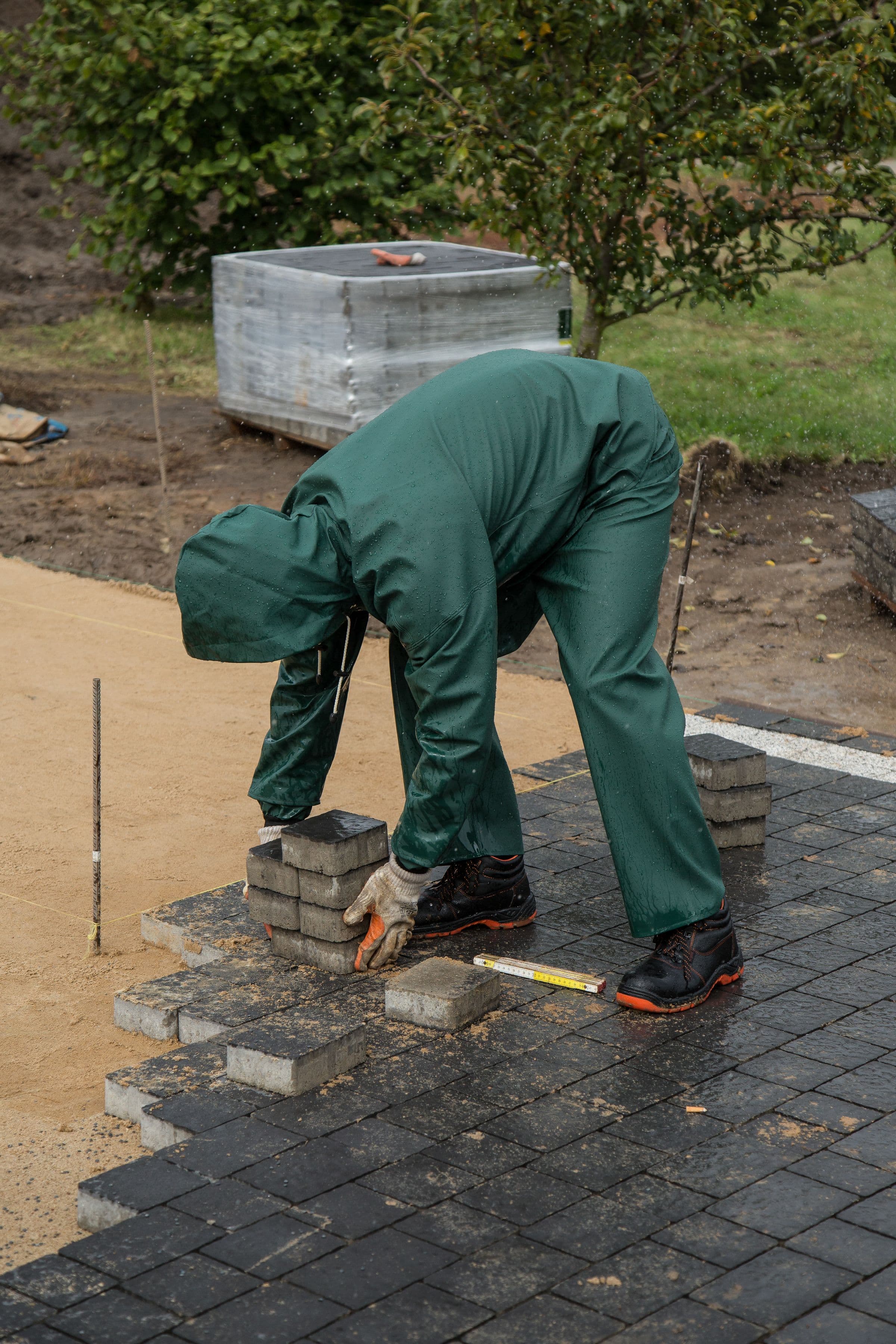
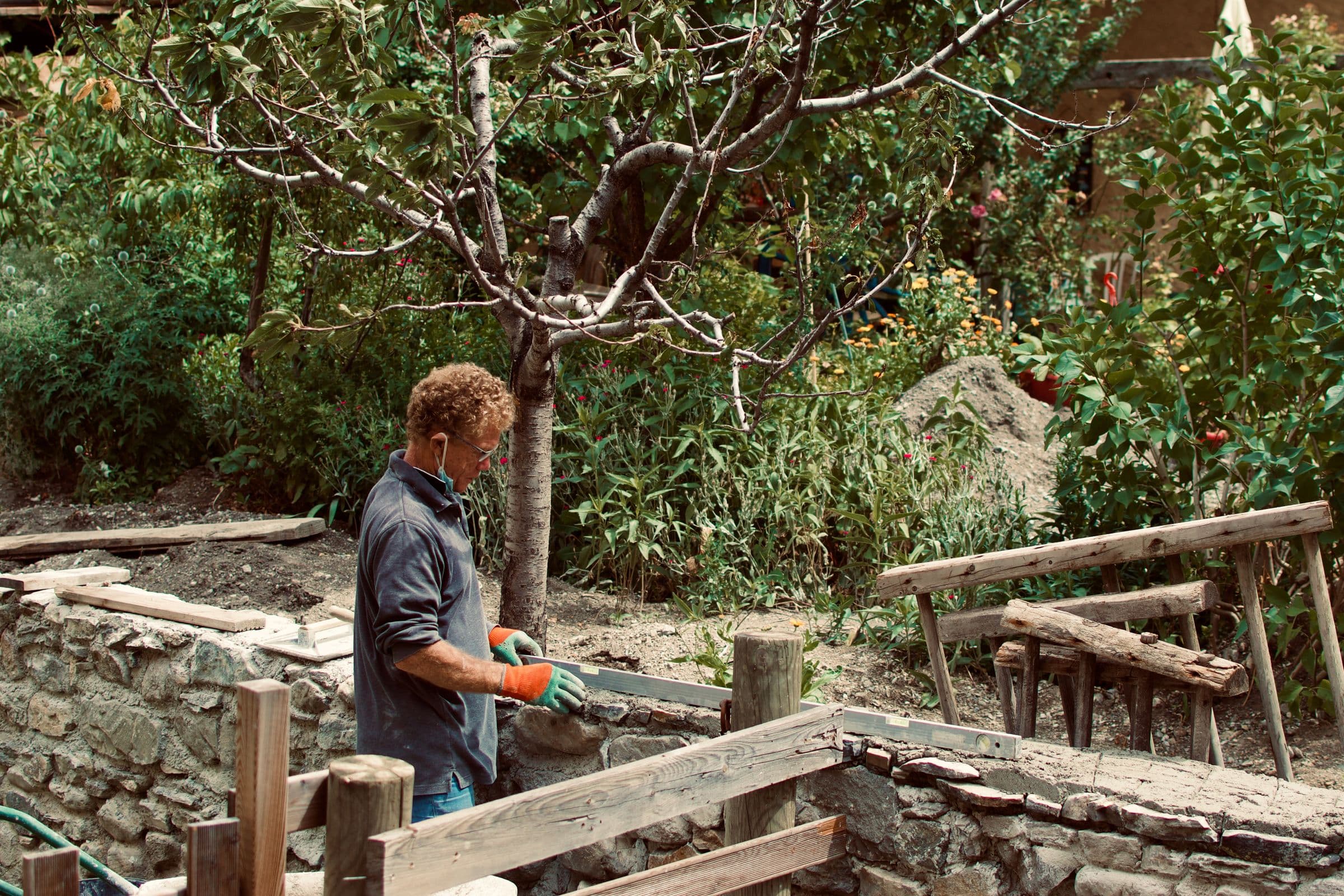
We lay paving dry on a compacted base and a screeded bed wherever we can, rather than on concrete. Dry-laid stone can be lifted and reset when a root moves it, and on a Portland lot with mature trees something will move it. Mortared paving in the same position cracks and stays cracked.
Basalt, bluestone and reclaimed brick, mostly. All three weather to something better than they started as, which cannot be said of poured concrete.
Irrigation
Drip, on separate zones for woody plants and for perennials, because they want completely different things. Run deep and infrequently — three long soaks a month beats a daily sprinkle, which trains roots to stay at the surface where they will cook.
On most Oregon-side gardens we design irrigation to be reduced every year and switched off around year four, and we say at the outset which plants will still need it after that. In Vancouver, where the soil drains fast and the summers run hotter, it stays.
Planting
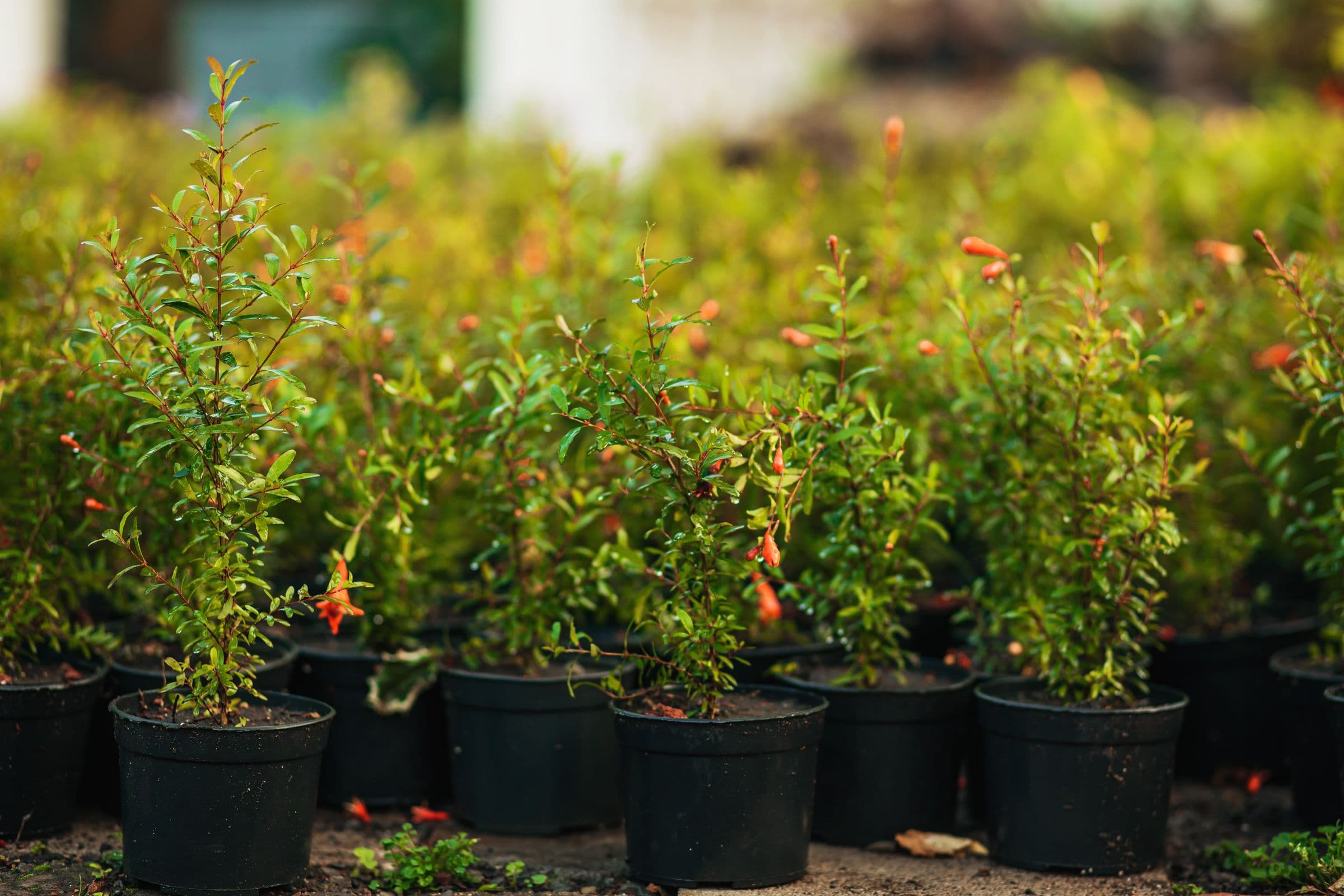
We buy small on purpose. A one-gallon Vaccinium ovatum overtakes a five-gallon one inside four years, costs a third as much and roots into the native soil instead of sitting in its own potting mix. The exception is trees, where an extra two years of head start on the canopy is worth paying for.
What your garden looks like while we are in it.
Bad. For about three weeks it is bad, and there is no version of this work where it is not. There will be a digger, there will be a spoil heap, there will be a fortnight where the whole thing is churned mud and you will wonder what you have done.
What we can promise is the shape of it. A typical eight-week build runs: one week of demolition and grading, two of drainage and base work, two of hardscape, one of soil, one of planting and one of making good. You get that schedule before you sign, and you get told on the Friday what is happening the following week.
The crew arrives at seven and stops at half past three. They take the road plates up, sweep the street and leave the skip tidy, because your neighbours did not order this and have to live beside it for two months.